We're open as normal and you can view our COVID-safe information here.


Join our practice by adding your name to our waiting list. Join Today

Book your appointment today

now

Implants, bridges or dentures? Choosing the right tooth replacement in Walsall
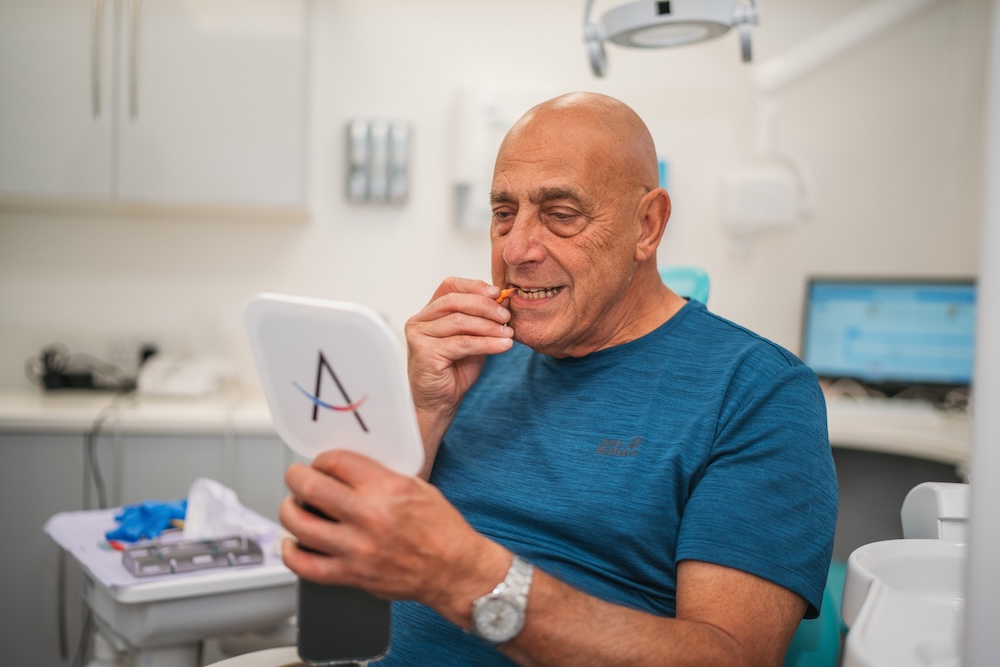
Losing a tooth can feel like a small thing at first. Then you notice yourself chewing on one side, covering your mouth when you laugh or avoiding certain foods altogether. When it comes to tooth replacement options in Walsall, most people are choosing between three: dental implants, bridges and dentures. Each has its place, and the right one depends on your mouth, your health, your budget and how you want life to feel afterwards. This guide compares them honestly so you can walk into your consultation already knowing the questions to ask.
Key takeaways
- Implants replace the whole tooth, including the root, and are fixed into the jawbone.
- Bridges fill a gap by attaching a false tooth to the teeth on either side.
- Dentures are removable false teeth that rest on the gums, and can also be secured with implants.
- Implants help prevent the bone loss that happens after a tooth is lost; bridges and conventional dentures do not.
Why replacing a missing tooth matters
A gap is not only about appearance. When a tooth is lost, the teeth next to it can gradually drift into the space, which can affect your bite and make cleaning harder. The jawbone where the root used to be also starts to shrink over time, because it no longer has a root to support. Over years, that bone loss can make the face look more sunken around the mouth.
Replacing a missing tooth, in whichever way suits you, helps you eat comfortably, speak clearly and protect the teeth you still have.
Dental implants
A dental implant is a small titanium post placed into your jawbone, where it acts like a natural tooth root. Over a few months, the bone heals around it and fuses with it. A crown, bridge or denture is then fixed on top.
What we like about implants: they are the closest thing to having your natural teeth back. They do not rely on neighbouring teeth for support, they help preserve the jawbone, and they have the potential to last a lifetime with good care.
Things to consider: implants involve minor surgery and a healing period, so treatment usually takes four to twelve months from consultation to final tooth. You also need enough healthy bone and healthy gums, although we can often help prepare your mouth if you do not have these yet. A single implant and restoration at Allsopp Dental costs £2,450.
Dental bridges
A dental bridge fills a gap by fixing a false tooth to crowns placed on the teeth either side of it. It is fixed in place, so you do not take it out.
What we like about bridges: they are quicker than implants, with no surgery or healing period, and they look natural.
Things to consider: the neighbouring teeth usually need to be shaped to hold the crowns, even if they are perfectly healthy. A bridge also does not replace the root, so it does not stop bone loss underneath the gap, and bridges may need replacing over time.
Dentures
Dentures are removable plates of false teeth that rest on your gums. A partial denture replaces a few teeth; a full denture replaces a whole arch.
What we like about dentures: they can replace many teeth at once, they are non-surgical and they are often the most affordable starting point.
Things to consider: conventional dentures can move when you eat or speak, which many denture wearers find frustrating. They also do not prevent bone loss, so they can become looser as the jaw changes and may need adjusting or remaking over the years.
The in-between option: implant-retained dentures
If you already wear dentures, or need to replace a whole arch of teeth, you do not have to choose between dentures and implants. Implant dentures clip onto a small number of implants, which hold them securely in place while still letting you remove them for cleaning. Alternatively, several implants can support a fixed bridge that stays in permanently.
For many denture wearers, this is the change that finally lets them bite into an apple again without thinking twice.
Implants vs bridges vs dentures at a glance
- Replaces the root: implants yes; bridges no; dentures no.
- Fixed or removable: implants fixed (or clip-in for implant dentures); bridges fixed; dentures removable.
- Affects neighbouring teeth: implants no; bridges yes, the teeth either side are shaped; dentures may rest on nearby teeth.
- Helps prevent bone loss: implants yes; bridges no; dentures no.
- Treatment time: implants four to twelve months; bridges usually a few weeks; dentures usually a few weeks.
Which tooth replacement is right for you?
There is no single right answer, and anyone who tells you otherwise without examining your mouth is guessing. Implants are often the best long-term option if you are healthy and have enough bone. A bridge can be a sensible choice if the teeth either side already need crowns. Dentures remain a good solution for replacing lots of teeth, especially when combined with implants.
At your consultation, we use CBCT, a type of 3D X-ray, and digital scans to look at your bone and teeth in detail, then talk you through every suitable option, including the ones that cost less.
Book a tooth replacement consultation in Walsall
You deserve to eat, smile and speak without thinking about the gap. Our implant dentists, Dr Jonathan Allsopp and Dr Mandeep Soorae, will give you honest advice on every option. Book a consultation at our Bridge Street practice. We see patients from across Walsall, Lichfield and Aldridge.
Frequently asked questions
Which lasts longer, an implant or a bridge?
Implants have the potential to last a lifetime with good care. Bridges and dentures typically need replacing every five to ten years.
Can I get an implant years after losing a tooth?
Often, yes. If bone has been lost in the area, you may need treatment to rebuild it first. We will check this with 3D imaging at your consultation.
Am I too old for dental implants?
There is no upper age limit. What matters is good oral health, enough bone and stable general health.
Can I switch from dentures to implants?
Yes. If you already wear dentures, you may be a good candidate for implants that support a denture or a fixed bridge.
Where we are
and how to get in touch
- 01922 614 685
- Allsopp Dental Practice26 Bridge Street, Walsall, WS1 1HR
- Chat with us on live chat between 8am to 8pm

When are we open?
- Monday8:30am - 5.00pm
- Tuesday8:30am - 5.00pm
- Wednesday8:30am - 5.00pm
- Thursday8:30am - 5.00pm
- Friday8:30am - 5.00pm
- Saturday8:30am - 1:00pm*
- SundayClosed
- * Every second Saturday
View our seasonal hours